Thursday, February 7, 2013

The Penalty (1920)


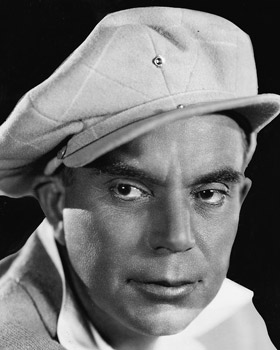
(image courtesy LA Times)

A young man, an accident victim, lies in a hospital bed. In a semi-conscious haze he overhears the frantic words of his doctors; they’ve needlessly amputated both his legs and are desperate to cover their error. The boy’s parents enter and weep as they receive the news: "Only immediate amputation could save your child's life." “He lies!” cries the boy, only to have his words written off as an “effect of the ether”.

Fast forward now, and we meet the boy as a grown man – as Blizzard (Lon Chaney), the crime lord ruling the San Francisco underworld from his crutches. He has big plans for himself and the city, the gruesome details of which are as dark and cold as his name. A legion of slave women labor towards his end…but there are two who hold his entire fate in their hands: Barbara (Claire Adams), the artist for whom he sits, and Rose (Ethel Grey Terry), an undercover spy for the police. How their destinies mix to change all of their lives together is the plot of this riveting blend of crime drama and horror.

God, I loved this movie.


(image courtesy Films Muets - Silent Movies)

Can we just talk for a minute about how unbelievably badass Lon Chaney was?  The man was willing to do anything to commit to his role – Method actors have nothing on him!  From Motion Picture Magazine, Sept 1920:

He played his part with his leg[s] strapped behind him, and it hurt so terribly that he could only work for a few moments at a time and then had to be released and rest for a while before he could continue working.

I can’t help but be a little breathless over LC’s grace and dexterity.  There’s a scene where Blizzard pulls himself up a hand ladder – you can’t help but be amazed at not only the upper body strength, but how natural and effortless he makes it look.  According to Wikipedia, the original print had a short epilogue of Chaney out of character to prove he really wasn't a double-amputee; I can’t think of any other contemporary of his that was so believable as to need a disclaimer. 

(image courtesy myawkwardself.tumblr.com)


It’s not just his physical acting that blew me away, however.  Chaney gives a taste of the sinister yet complex character roles he would excel in, especially for Tod Browning; in a role which would easily be one-dimensional, LC adds humanity.  He makes Blizzard dangerous, but also flawed, relatable.  We see how he has been broken by life, crippled in spirit as well as body.  It is only when playing his beloved piano that Chaney allows the beauty of Blizzard’s pain to show through.  “I can murder anything but music.”

Claire Adams’ Barbara is suitably terrified by Chaney, so much so that when she (inevitably) becomes sympathetic to him, it’s a bit of a stretch.  Ethel Grey Terry does better by Rose, giving her a more credible mix of fear, awe, and – dare I say it – love.  

Even a far-fetched ending cannot damage this film, one of the best silents I have ever seen.  I give this one: 

Friday, February 1, 2013

A Riddle

A little something different today!  This star started in silents and became a household name:

The curtain is dusky, a desert sun red;
will Charles be performing, or will he instead?
The stage was big business back in his time
(you can ask him yourself, just drop in a dime
and call straight from the book, in the Ls, not the Js.)
He'd be happy to speak of his music hall days.


Can you guess who?

EDIT: Ruby answered correctly on the FF + SS Facebook page:  It's Stan Laurel! 


(photo courtesy Letters From Stan)

 His birth name was Arthur Stanley Jefferson; early in his stage career, as a member of the Karno Troupe, he was an understudy for Charles Chaplin.  His phone number was listed in the 1960s, and he was warm and friendly to any fans who called him for advice or inspiration.  (One such fan was comedian Dick Van Dyke.)  Laurel made his first film, Nuts in May, in 1917, and even did an early short with Oliver Hardy in 1920 -21.  However, it wasn't until 1927 that they were formally paired together -- and the magic began.


Friday, January 25, 2013

5-Star Time Capsule: "The Show of Shows"


Once upon a time, sound and dialogue were added to movies, and “silents” fell to the cutting-edge “talkies”.  Studios were suddenly falling all over themselves trying to come up with the best way to feature their players with the new technology – and what better way than to have your most popular stars chatting, singing, and frolicking their pretty selves in a slam-bang celebrity variety show?

(image courtesy http://theinterrobang.com)

MGM drew first blood with The Hollywood Revue of 1929, but Warner Bros. answered right back with The Show of Shows.  Almost their entire star roster was featured in skits, comedy shorts, and musical numbers – lots of glitter and glamour.  The extant print available for viewing today is sadly missing the glorious two-strip Technicolor (aside from the “Chinese Fantasy” number, starring a very young Myrna Loy), but it’s not hard to appreciate the effort Warner Bros. put into making this a shiny and entertaining spectacle.

You can read a full list of all the skits/numbers and their performers here, so I make no apologies for the very subjective gushing about to follow.  Without further ado:

Jennifer's Completely Biased List of Best Parts 

• Lord Almighty and Christ on a cracker, I love Winnie Lightner.  If I had a time machine, I’d totally go back to see her on the stage.  She sings “Ping Pongo” and “Singin’ in the Bathtub” …actually, she doesn’t sing.  She belts.  She shakes the rafters with that voice, loud and glorious in the Sophie Tucker/Fanny Brice vein. 

(photo courtesy Find A Grave)

Lightner was an extremely popular vaudeville star who parlayed her success into some pre-Code films (not enough!).  Plus, she was from Long Island!

• The “Meet My Sister” number is chock-full of pretty, well-costumed cultural stereotypes posed by famous sisters.  Cute, but among the expected suspects (Dolores and Helene Costello, Alice and Marceline Day, Loretta Young and Sally Blane) were two pairs that made me ridiculously happy:

Alberta and Adamae Vaughn 

(photos courtesy Find A Grave and LucyWho.com)

Cute-as-a-button Alberta started as a Mack Sennett Bathing Beauty and appeared in some 130 films before leaving the screen in 1935.  She worked with Harry Langdon and Stan Laurel, and was a 1924 WAMPAS Baby Star (the same year as Clara Bow).  

Her sister, Adamae, was a Baby Star herself in 1927.  Her career was much more limited, lasting only nine films, and she died at age 37 from undisclosed causes.  Strangely enough, she was in pictures first; it was only after a casting call needed a brunette that she brought along her sister.  The rest, as they say, is history.

Armida and Lola Vendrell 

(photo courtesy http://www.allstarpics.net)

The beautiful and diminutive Armida Vendrell (she was barely 4'11") started in a vaudeville dancing act with her two sisters, Lola (sometimes billed as Lolita) and Lydia.  Her talent and natural vivacity got her noticed; she started in short subjects, and by age eighteen was handpicked by John Barrymore to be the gypsy dancer in General Crack.  She was in 29 films, mostly dancing or playing typical "Mexican" roles, but never reached the big time.  

Sadly, I can't find any further info about Lola; her IMDb page only lists one Spanish-language film after her appearance in Show of Shows, and an image search only brings up photos of her more-famous sister.  

• John Barrymore doing a scene from Henry VI (Part III).  It’s Jack.  Doing Shakespeare.  Enough said.

(photo courtesy IMDb)

• The crazy, frenetic, brilliant dancers of the “Lady Luck” segment.  I tried looking them up everywhere, and I can’t find names – even IMDb only lists first names with vague “dancer” tags.  I can’t even describe how marvelous they were…oh here, just watch for yourself:


The shimmy dancer and the pseudo-breakdancing and the completely over-the-top parading around of Betty Compson (Mrs James Cruze, remember?) and the chandeliers made of WOMEN!!!   In color, this would’ve been breathtaking; rainbow streamers even rain down at the end.  Sigh!

I taped this off of TCM, so if they ever show it again, run to set your DVR.  You need to see this.  (Yes, even with Frank Fay as emcee.)  You will love it!

I give this one (as if you needed to ask by now): 

Tuesday, January 15, 2013

Million Dollar Mystery: James Cruze


Say the name James Cruze, and directing immediately comes to mind: The Covered Wagon, The Great Gabbo, I Cover the Waterfront.  While he’s best remembered for his work behind the camera, his career started long before, in front of it - and not just as daring newsman Jim Norton in The Million Dollar Mystery.  He was the most famous of all the Thanhouser actors...

…and, more than a bit of a bastard.

image courtesy Thanhouser

Born James Vera Cruz Bosen in 1884, his story was memorable (and questionable!) from the get-go:

According to a note in The Billboard, October 1921, "Cruze is a quarter-breed Ute Indian and was born in the Uintah Indian Reservation near Vernal, Utah. His grandmother on his mother's side was burned at the stake for giving birth to a pair of twins. The Indians of the tribe considered this the performance of a witch and took those extreme measures to rid themselves of what they considered a malignant influence." It was said that James Cruze had 17 siblings. He was fond of telling different stories to different interviewers, and over the years many diverse versions of his childhood and early career appeared in print. [courtesy Thanhouser]

He left home by age 16, and began working with the Lubin company in 1910.  By 1911 he had switched to Pathe, and subsequently joined Thanhouser.  In 1913, he married Marguerite Snow, and if you’re a reader of this blog you know what a heavenly match that was.  (Hint: click the link – it wasn’t.)  Their marriage produced his only child, daughter Julie Jane Cruze.

image courtesy Thanhouser

By 1915 he’d been let go from Thanhouser:

When Edwin Thanhouser returned to New Rochelle in early 1915, he made it clear to James Cruze that his services were no longer needed with the firm, and by that time the actor was seeking a change anyway. On May 15, 1915, he and Sidney Bracy, also formerly of the Thanhouser studio, left New Rochelle with mechanic Abraham A. Meltzer and a cameraman, and headed west on a self-arranged publicity tour. [courtesy Thanhouser]

Late 1915 found him deep in debt and needing work, so he met up with Snow in California, and began a stint at Metro.  He did a lot of studio hopping, endng up at Fox in 1917.  Besides Pathe, Metro, and Thanhouser, he had also done time at Kinemacolor, Kimberley, Palo Alto, and Lasky.

Skip ahead a little to 1923.  Cruze, divorced from Snow for a year,  had just directed The Covered Wagon, which brought him much acclaim and the highest salary in the business ($6k per week).  If only his personality had been as great as his work; cameraman Karl Brown gives us a peek:

Karl Brown [stated] Cruze was a drunken, obscene, lecherous individual worthy of little more than contempt…”[he] was now completely free to indulge his own natural urges…he not only did as he pleased, he over-did every chance he got to thumb his nose at whatever is considered polite behavior among civilized people.”  [courtesy Thanhouser]

[image courtesy jamescruze.org]

Cruze married actress Betty Compson in 1925, and by all accounts this marriage was just as wonderful as his first; the drinking, parties, and general debauchery of which he was so fond didn’t even slow down, much less stop, and the police were frequent visitors at their household.  They often split up, but always got back together.

[photo courtesy Silent Ladies & Gents]

From 1927 through 1929, Cruze started his own production company, was subpoenaed in a proceeding concerning one death and several injuries surrounding one of his films, was jailed for refusing to pay an artist for his wife’s portrait, and legally separated from Betty Compson.  By 1930, they were officially divorced, and Cruze was bankrupt.  The rest of the 1930s brought him more debt, more dead-end projects, a real estate court battle with his daughter, and heart problems. His career was officially over by 1941, which also found him married (for the third and last time) to Alberta Beatrice McCoy.  (Happily, he, Marguerite Snow, and Julie Jane were able to mend fences enough for them to be frequent visitors before his death.)

James Cruze died, almost completely broke, on August 3, 1942.  He was 58.

[Richee photo, courtesy LA Times]

Friday, November 30, 2012

Million Dollar Mystery: Marguerite Snow

What better way to kick off the holiday season than with some Snow?  ;)


photo courtesy Looking For Mabel Normand

Marguerite Snow was another of the big Thanhouser stars, and played the second lead -- the mysterious Countess Olga Petroff -- in The Million Dollar Mystery.  Like Florence LaBadie and so many other early film stars, the information about her is spotty and confusing.  Just trying to pin down her date and place of birth is bewildering:


Marguerite Snow was born on September 9, 1889 (some accounts say 1891 or 1892; she kept moving her birth date forward) in Salt Lake City, Utah. (Some listings give Savannah, Georgia; a 1916 listing in Motion Picture News Studio Directory gives her birth date as September 9, 1892, in Atlanta; an obituary in The Los Angeles Examiner, February 19, 1958, gave Denver as her natal city.) [courtesy  Thanhouser]


Regardless of the year, we know Miss Snow was born into a performing family.  Her father was a comedian, and with her mother formed the vaudeville act Snow & West.  Young Marguerite, "Peggy" for short, grew up in Denver, and made her first stage appearance in 1907.  She quickly rose to prominence, playing leads in shows like The Christian and Peter Pan.  By 1910 she was working for Thanhouser, and a year later her popularity was great enough for her to place second in a "favorite photoplay star" contest.  (Mary Pickford placed third!)


Also, by 1911, she had met James Cruze, the aforementioned "intrepid reporter" of Million Dollar Mystery and Thanhouser's best-known leading man.  They were married in January (some sources say February)  1913, and a daughter, Julie Jane, was born in October of that same year.  (I'll pause while you all do the math.)  The marriage was an unhappy one, and Snow later testified to frequent physical abuse by Cruze, including one famous incident in public:


The couple were at a party when the actress requested James take one of her women friends home. The ensuing quarrel ended with Cruze beating his wife about her face and body. She was knocked to the floor and one of her teeth was dislodged.  [courtesy Wikipedia]


images courtesy Thanhouser and moviecard.com

They divorced in 1923, with Snow retaining primary custody of Julie.  Towards the end of Cruze's life, they appeared to have reconciled enough for both Marguerite and Julie to visit him frequently at his home.  (Cruze died in 1942; you'll hear more about him -- what a character -- in my next Million Dollar Mystery piece.)

Marguerite left Thanhouser in 1915, but continued to work in films for studios such as Metro and Artcraft.  While still married to Cruze, she held dual addresses in both New York City and California, but after the divorce she remained primarily on the West Coast.   Her screen career lasted until 1925, when she remarried and retired; her marriage to comedian Neely Edwards lasted until her death.  


Marguerite Snow died of complications following kidney surgery on February 17, 1958.  She was 68.


image courtesy Thanhouser

Wednesday, November 21, 2012

Give Thanks

For all the folks in the US, have a very Happy Thanksgiving!  So much has happened in the last couple of months, and I see the lives of many in my own neighborhood changed.  I am blessed and grateful for what I have, and that includes all of you!

I will be returning soon with the long-promised article on Marguerite Snow, as well as new poetry and tidbits to amaze and delight.  (Or at least keep you occupied over your morning coffee.)


Tuesday, October 16, 2012

Million Dollar Mystery: Florence La Badie

Ironic that Florence La Badie starred in "Million Dollar Mystery" - since her own life both began and ended under mysterious circumstances.  In between the cradle and the grave, she was one of Thanhouser's brightest, most beautiful stars.

Look at those eyes:


Florence was born in New York City, on April 27, 1888.  She was adopted by the La Badies as a baby, and lived in Montreal.  As to her biological family, we have but one clue.  From the Thanhouser website:

A deposition by Marie C. Russ, a patient at the Home for Incurables, New York City, October 8, 1917, stated that: "Florence Russ, my daughter, is an owner of lot no. 17187 in the Greenwood Cemetery, being a grandchild and heir of Mrs. Louisa Russ, the purchaser of said lot. That some years ago said Florence Russ was legally adopted by Joseph E. and Amanda J. LaBadie, and her name legally changed to Florence LaBadie.…"

Given that the only person who ever came forward with this info was institutionalized for mental illness, we can only speculate to its truth, but most seem to accept it as fact.


She began acting on stage in 1908, and toured through 1910 in productions like The Ragged Robin and The Blue Bird.  But in 1909, it was a chance studio visit, a tag-along with her best friend, which would start her film career.

Guess who that best friend was?

Hint: it's not Ben Turpin.

Florence got a bit part that day in a Biograph production, but only remained with them a year; in spring 1911 she signed with Thanhouser.  Here's where she flourished, quickly moving up to lead roles (doing her own stunts, too) and becoming their best known (and most publicized) player.  

image courtesy Thanhouser

Florence was also a great supporter of the peace movement; a soldier's letter from the trenches, complete with devastating photographs, moved her so much that she converted them into slides - on her own dime - and toured the country giving lectures and displaying the horrors of war.

Sadly, while at the height of her fame, tragedy struck:

While Florence was driving an automobile near Ossining, New York on August 28, 1917, with her fiancé, Daniel Carson Goodman as a passenger, the brakes failed, after which the car plunged down a hill at a frightening rate, causing it to overturn at the bottom. While Goodman escaped with a broken leg and minor injuries, Florence was thrown from the vehicle and suffered a compound fracture of the pelvis. She was hospitalized in Ossining, under the care of Charles C. Sweet, M.D., of 13 Maple Street, who first attended her the day following the accident. Complications ensued, and her condition worsened.

Florence La Badie died on October 13, 1917.  She was only 29 years old.

photo courtesy Thanhouser


After her death, her adoptive mother, Amanda La Badie, disappeared.  She did not attend her daughter's funeral, and her house was simply abandoned.  To this day, only Florence rests in the double plot meant for her and her mother.  No word of Amanda was heard ever again.

Florence's death was surrounded by controversy.  There were those who believed that she'd had an affair with President Woodrow Wilson, and that something occurred between the two that necessitated her being "removed".  From the wonderful blog Silence is Platinum (I highly recommend you read her entire post on Miss La Badie):

[Florence] accepted [Pres. Wilson's] invitation to visit the White House during Christmas of 1914. She returned from the trip a different person. She was an emotional wreck, forgot her lines on set, stopped answering her telephone or speaking to her friends...

Any details were pure conjecture; those closest to her refused to talk about any of it.  The Legion of Decency notes:

On more than one occasion, Mary Pickford was seen to become very agitated when someone asked about her friendship with Florence LaBadie. Once, she told a reporter, "There are some things better left unresolved!" and fled the room.

We will never know what happened towards the end of Florence's life, or what shadow was cast over her death...but thanks to the preservation efforts of Thanhouser, we can see this lovely woman doing what she should be remembered for: acting.   There are twelve of her films available for viewing on their website for free:  Click here to watch.

image courtesy Thanhouser


Next time, we'll delve into the drifts around Marguerite Snow.